


It’s been looming over the horizon like a literary zeppelin for quite some time now, but now I can officially say… Polyglot NaNoWriMo 2023 has begun! I’ve spent the past week or so getting acquainted with my characters and writing a short skeleton draft (which is really more of a timeline of events), to prepare myself for the challenge ahead. As with last year, I’m going to have a bash at writing in Welsh, even though my level is still pretty basic – at the very least, I’m going to start in Welsh, but I might end up chickening out and switching to Swedish, Danish or Norwegian (which I used for the preparatory exercises I posted over the past three months, which you can check out here, here, or even here if you find yourself curious). If you follow my social media you’ll know I’ve been dabbling a little in Polish, but unless people would be interested in reading 6,000 words about a man eating an apple, I don’t think I’m quite ready to use that for this challenge. But before I launch into any actual writing, I’d like to take a moment of your time to just explain what the challenge is all about, in case you’ve missed me wanging on about it before now!


Polyglot NaNoWriMo is a twist on the well-established National Novel Writing Month challenge, where participants write around 1,667 words per day every day in November and end up with an unedited novel of around 50,000 words at the end of the month. This is more or less the same, but the word count is greatly reduced (to a suggested target of 200 words), and you’re supposed to write in a language that is not your mother tongue. Now, I should stress that the suggested word count isn’t set in stone by any means – over the past few years, we’ve had people mold the challenge to fit all kinds of needs. For example, if 200 words a day seems like too much, you could choose to do 100. Or if you’re writing in a language that makes counting separate words more difficult, like Chinese or Japanese, then you can opt for 500 characters a day instead. And this is just if you’re writing a short story, or a diary entry – if you decide you want to do poetry, you could decide to do one poem a day instead. You can really make it whatever you want it to be. The most important thing to remember as the month goes on is not to edit your work as you go, and not to get too bogged down in using the correct grammar or word forms as you’re writing – you should focus on getting words on the page. You can print it off and attack it with a red pen when the month is over – and even if you lose half of it in the process, you’ve still got around 3,000 words that you didn’t have before. No mean feat in and of itself!
There are also additional challenges you can take on – for example, you can choose to make a list of every word you had to look up in a dictionary, with a view to creating a flash card deck when the month is over. It’s a good way to build your vocabulary in a language you’re learning – it’s hard to know which words you’re missing from your lexical arsenal until you come to use them and they’re not there.
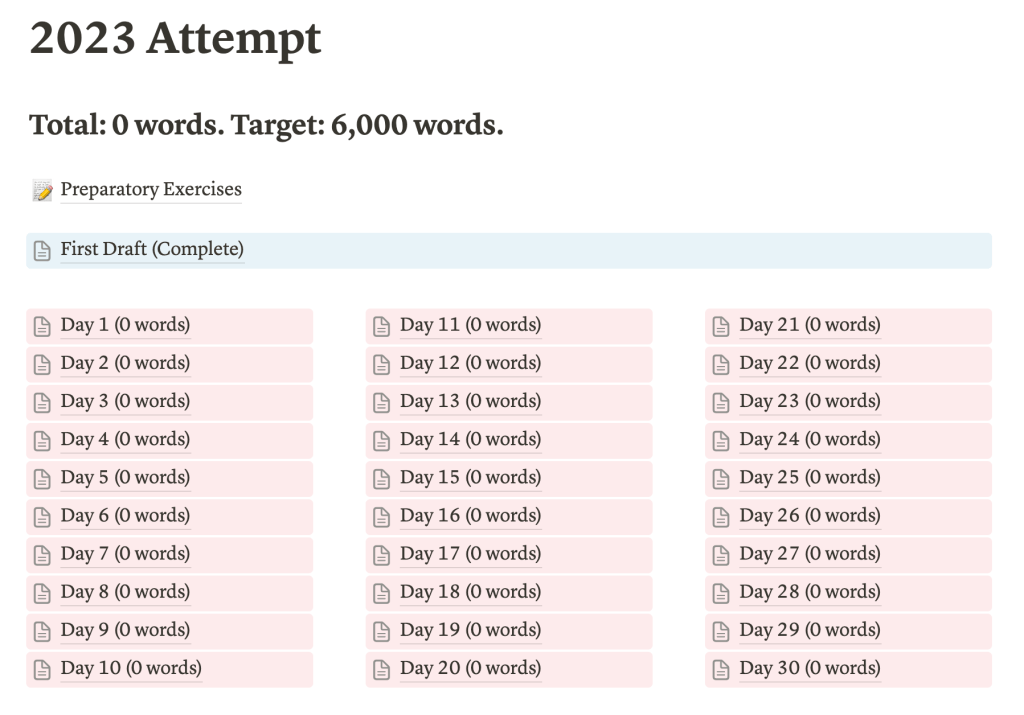
And that’s about it! I just wanted to take this opportunity to explain the challenge in a little more detail – I know those of you who followed me on Twitter once upon a time were quite well-versed, but as I’m not using that anymore (for reasons that may be obvious), for the first time this challenge is reaching a whole new set of people. Of course, if you have questions, please feel free to reach out either here in a comment, or via Mastodon (@sprakskatan@toot.wales) or Instagram (@sprakskatan), and I’ll do my best to help you. For now, all that remains to say is good luck if you decide to take part, and if you don’t, that’s fine too! Take care of yourself, and I’ll hopefully see you next month with 6,000 words of completed creative writing!
— J.

 den språkliga skatan
2 thoughts on “Polyglot NaNoWriMo: Tokyo Drift”